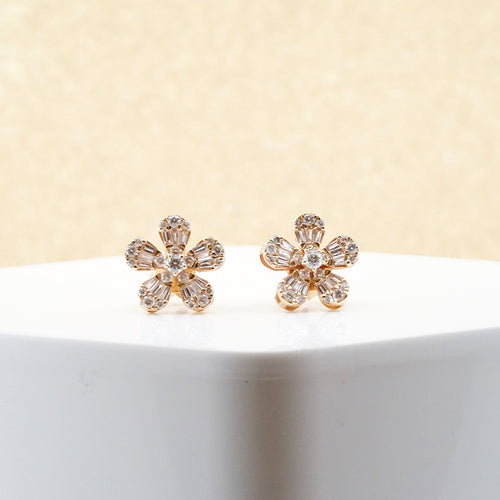


You can take off most earrings by holding the front of the earring and gently removing the back. First, wash your hands. Hold the earring stud with one hand and gently pull or twist the backing with the other hand. The right method depends on the type of earring you wear.
For flat-back earrings, unscrew or gently pull the front, depending on the design. For butterfly-back earrings, slide the backing off carefully. Never force an earring that feels stuck or causes pain. If your piercing is new, swollen, or red, get help from a qualified piercer or healthcare professional before removing the jewellery.
What Type of Backing Does Your Earring Have: Butterfly, Screw-In, or Flat-Back?
Before removing an earring, check how its backing works. The right method depends on the design. Do not pull every earring in the same way.
|
Earring backing |
How to identify it |
Usual removal method |
|---|---|---|
|
Butterfly back |
A small metal piece shaped like butterfly wings |
Hold the front and gently slide the back off. |
|
Screw-in back |
The front or back has a threaded connection |
Hold one part still and turn the threaded part to the left. |
|
Push-pin flat back |
A flat disc sits behind the ear |
Hold the disc and gently pull the front piece out. |
|
Threaded flat back |
A flat disc sits behind the ear, with a screw-on front |
Hold the disc and unscrew the front to the left. |
|
Huggie earring |
A small hoop with a hinge or click closure |
Find the joint and gently open the clasp. |
Some designs work differently, so check the maker's instructions if you are unsure.
Is This a Brand New Piercing or an Old One?
This is an important question before removing any earring.
-
Brand new or still healing: Do not remove or change the jewellery yourself unless a qualified piercer or healthcare professional advises you to do so.
-
Fully healed piercing: You can usually remove the jewellery carefully using the method for its backing.
-
Not sure whether it has healed: Ask a qualified piercer to check it first.
A piercing can look healed on the outside while the inside is still healing. Earlobe and cartilage piercings also heal at different speeds. Do not use a fixed number of weeks as the only sign that it is safe to change the jewellery.
Are You Experiencing Any Pain, Swelling, or Redness?
Check your ear before trying to remove the earring.
-
No pain or swelling: If the piercing is fully healed, use the correct removal method and move slowly.
-
Pain or swelling: Stop pulling or twisting the jewellery. Ask a qualified piercer or healthcare professional for advice.
-
Redness, heat, pus, or worsening pain: Seek medical advice because these may be signs of infection.
-
The earring seems to be sinking into the skin: Get urgent medical help. Do not try to dig it out.
If you think the piercing is infected, do not remove the jewellery on your own unless a healthcare professional advises you to.
How to Take Earrings Out Safely: Step-by-Step Guide
Follow these steps when the piercing is fully healed and the jewellery can be removed safely.
-
Wash your hands. Use soap and clean water before touching your ears.
-
Find a mirror. Use good light so you can see the backing.
-
Hold the front. Keep the earring steady so it does not pull on your ear.
-
Check the backing. Work out whether it pulls, twists, unscrews, or opens with a clasp.
-
Remove it gently. Use the method made for that earring type.
-
Slide the post out. Move slowly and stop if you feel pain or strong resistance.
-
Store the earring safely. Put the earring and its backing in a clean jewellery box.
MERA Jewellery recommends a careful approach to jewellery care. The same rule applies to any pair of earrings: understand the closure before you try to remove it.
How to Remove Butterfly Back Earrings
Butterfly backs are common on stud earrings. The backing grips the post to keep the earring in place.
-
Wash and dry your hands.
-
Hold the front of the stud with one hand.
-
Grip the butterfly back with the other hand.
-
Gently pull the back straight away from the ear.
-
If it moves freely, slide the stud out of the piercing.
If the back is tight, try a small, gentle movement while pulling. Do not squeeze it hard or use sharp tools. If it will not move, stop and ask a professional for help.
How to Take Off a Piercing Earring
Piercing earrings may have secure backs that are harder to remove than normal fashion earrings. Some have a locking back, while others use a screw or push-pin system.
If the piercing is fully healed, first identify the backing. Hold the front of the earring steady, then release the correct closure gently. Do not assume every starter earring pulls off like a normal stud.
If the piercing is new, painful, swollen, or still healing, leave the jewellery in place and seek advice from a qualified piercer or healthcare professional.
How to Take Out Flat Back Earrings
Flat-back earrings have a small, flat disc behind the ear. They often use one of two closures: a push-pin front or a threaded front.
How to Remove Push-Pin Flat Back Earrings
-
Hold the flat disc behind the ear.
-
Grip the decorative front.
-
Gently pull the front away from the post.
-
Once the front releases, carefully slide the post out.
Some push-pin designs fit tightly, so a small, controlled movement may be needed.
How to Remove Screw-In Flat Back Earrings
-
Hold the flat disc firmly.
-
Grip the decorative front.
-
Turn the front to the left, or counter clockwise, to loosen it.
-
Once the front comes off, gently slide the post out.
The direction may differ for unusual designs. Check the maker's instructions if it does not loosen easily.
How to Put In Flat Back Earrings
Putting in flat-back earrings also depends on the closure type. Only do this if your piercing is fully healed or a qualified professional has advised you to change the jewellery.
For push-pin flat backs:
-
Wash your hands.
-
Hold the flat disc behind the ear.
-
Guide the clean post through the piercing without forcing it.
-
Push the front into the post until it fits securely.
For threaded flat backs:
-
Hold the flat disc behind the ear.
-
Guide the post through the piercing gently.
-
Place the threaded front onto the post.
-
Turn it to the right until secure, without overtightening.
If the post does not pass through easily, stop. Never force jewellery through a closed or painful piercing.
How to Remove Butterfly Back Earrings vs. Screw Back Earrings
These two styles may look similar from the front, but their backs work differently.
|
Feature |
Butterfly back |
Screw back |
|---|---|---|
|
Closure |
Grips the post through tension |
Uses threads to hold the pieces together |
|
How to open |
Pull the back gently away |
Turn the threaded part to the left |
|
Common mistake |
Pulling too hard |
Twisting the wrong part |
|
When stuck |
Stop and get help if gentle movement fails |
Stop if the thread will not loosen |
Always hold the earring steady while releasing its backing. This helps reduce pulling on the ear and protects the jewellery.
How to Remove Stud Earrings
Stud earrings have a small post that passes through the ear. The backing may pull off, screw on, or use a special locking system.
To remove a standard stud, hold the decorative front with one hand and gently pull the backing away with the other. Once the backing is off, slide the post out slowly.
For screw-back studs, turn the threaded part to the left instead of pulling it off. If you are unsure which style you have, check the product instructions first.
Stud Earrings: How to Take Off Different Backings
Use this quick guide to choose the right method.
|
Stud style |
What to do |
|---|---|
|
Standard push-back stud |
Hold the front and gently pull off the backing. |
|
Butterfly-back stud |
Grip the butterfly backing and slide it off. |
|
Screw-back stud |
Hold the front and unscrew the back to the left. |
|
Push-pin flat-back stud |
Hold the disc and gently pull out the front. |
|
Threaded flat-back stud |
Hold the disc and unscrew the front. |
Do not use one method for every stud. The wrong movement may damage the closure or hurt your ear.
How to Undo Earrings With a Screw Back
Screw-back earrings have threads that hold the front and back together.
-
Hold the front of the earring firmly.
-
Hold the screw-back part with your other hand.
-
Turn the threaded part to the left.
-
Keep turning gently until it comes loose.
-
Slide the post out of the ear.
If the screw does not move, do not force it with pliers. You could damage the threads or injure your ear. Ask a jeweller or qualified piercer for help, depending on whether the problem is with the jewellery or the piercing.
What to Do When an Earring Back Is Stuck
A stuck earring back can happen when the backing is too tight, difficult to grip, or covered with dried residue. The piercing may also be irritated.
First, check whether your ear is painful, swollen, red, or hot. If it is, stop trying to remove the earring and seek suitable professional advice.
If your piercing is fully healed and the ear feels normal:
-
Wash your hands and dry them well.
-
Use a clean mirror and good light.
-
Hold the front of the earring steady.
-
Try a very gentle movement in the direction needed for that closure.
-
Stop if the backing does not move easily.
A clean, dry cloth may help you grip the backing. Avoid sharp objects, household pliers, and forceful earrings twisting.
How Do I Get a Stuck Earring Back Off?
If you cannot remove the backing after a gentle attempt, do not keep pulling. Ask another person to look at the closure without forcing it, or contact a qualified piercer if the jewellery is in a piercing.
If the backing is embedded in the skin, the ear is bleeding, or swelling is increasing, seek medical help. Do not cut, squeeze, or dig around the backing yourself.
Mera Jewellery encourages careful handling of earrings to help protect both the jewellery and the wearer. When in doubt, getting professional help is safer than trying harder at home.
How to Open Huggie Earrings
Huggie earrings are small hoops that sit close to the earlobe. Many use a hinge and a click closure.
-
Wash your hands and stand in front of a mirror.
-
Find the small joint where the hoop opens.
-
Hold the main hoop gently.
-
Use your fingertips to release the hinged section at the clasp.
-
Open the hoop just enough to remove it from the piercing.
-
Slide it out slowly.
Do not pull the two sides apart at random. If the hinge will not open, check the manufacturer's instructions or ask a jeweller for help. Some hoop designs have a different closure.
When Can You Change Your Earrings?
You should change earrings only when your piercing has healed enough for a safe jewellery change. The time depends on where the piercing is, your healing process, and the advice of your piercer.
|
Piercing location |
What to know |
|---|---|
|
Earlobe |
Often heals faster than cartilage, but healing times vary. |
|
Ear cartilage |
Usually takes longer to heal and may need extra care. |
|
New or irritated piercing |
Do not change jewellery yourself without professional advice. |
Do not change earrings just because the ear looks normal. If there is pain, swelling, redness, discharge, or resistance, ask a qualified professional before making a change.
How to Care for Earrings After Taking Them Off
Good care helps keep earrings clean and in good condition.
-
Place removed earrings on a clean surface.
-
Clean them according to the care instructions for their material.
-
Dry them properly before storage if the material allows it.
-
Keep small backs in a separate compartment so they do not get lost.
-
Store earrings away from moisture and harsh chemicals.
-
Check clasps and posts for damage before wearing them again.
Mera Jewellery supports thoughtful jewellery care, from wearing earrings to removing and storing them. Taking a few extra seconds to check the closure can help prevent damage and make your jewellery last longer.
Common Earring Removal Mistakes to Avoid
|
Mistake |
Why to avoid it |
Better action |
|---|---|---|
|
Pulling hard on a tight earring |
May hurt the piercing or damage the jewellery |
Stop and identify the closure. |
|
Twisting every backing |
Some backs are designed to pull off, not unscrew |
Follow the closure type. |
|
Changing a new piercing too soon |
May disturb the healing process |
Ask a qualified piercer when it is safe. |
|
Using sharp tools |
May cut the skin or damage the earring |
Use your fingers only for gentle removal. |
|
Ignoring swelling or pain |
May worsen an injury or delay care |
Stop and seek professional advice. |
Frequently Asked Questions About Taking Off Earrings
1. How do you take off earrings without pain?
Wash your hands, hold the front of the earring steady, and gently release the correct backing. Do not pull hard or twist the wrong part. A fully healed piercing should not have strong pain during removal. If the earring hurts, feels stuck, or causes bleeding, stop and ask a qualified piercer or healthcare professional for advice.
2. How do you remove butterfly back earrings?
Hold the front of the stud with one hand and grip the butterfly back with the other. Pull the backing gently away from the ear while keeping the front steady. Once the backing comes off, slide the post out. If the back is tight, avoid using force or sharp tools. Seek help if it will not move easily.
3. How do you take out flat back earrings?
First, find out whether your flat-back earring uses a push-pin or threaded closure. For a push-pin style, hold the disc and gently pull the front out. For a threaded style, hold the disc and unscrew the front to the left. If you are unsure of the design or feel pain, stop and seek professional help.
4. How do you remove screw-back earrings?
Hold the front of the earring steady and gently turn the threaded backing to the left, or counterclockwise. Continue until the backing loosens, then slide the post out carefully. If the screw does not move, do not use household pliers or apply strong force. A jeweller can help with a damaged closure, while a piercer can advise on piercing-related problems.
5. What should I do if my earring back is stuck?
First, check for pain, redness, swelling, or bleeding. If any of these are present, stop and seek suitable professional advice. If the piercing is fully healed and the ear feels normal, you may try a gentle movement with a better grip. Do not force the backing. If it remains stuck, ask a qualified professional for help.
6. Can I remove earrings from a new piercing?
You should not remove or change earrings from a new or healing piercing without advice from a qualified piercer or healthcare professional. The hole may close or become irritated before it heals fully. Healing time depends on the piercing location and your body. If you have pain, swelling, or signs of infection, seek professional advice before touching the jewellery.
7. How do you open huggie earrings?
Look for the small hinge or clasp on the hoop. Hold the main part of the earring gently and release the closure with your fingertips. Open the hinged part only as far as needed, then slide the hoop out carefully. Do not pull the hoop apart with force. If the clasp will not open, check its instructions or visit a jeweller.
8. Can I use pliers to remove a stuck earring?
It is best not to use household pliers to remove a stuck earring. They may damage the backing, bend the post, or hurt your ear if they slip. If the jewellery will not move with gentle handling, stop trying. Ask a jeweller about a damaged clasp or a qualified piercer about jewellery that is stuck in a piercing.
9. When should I change my earrings for the first time?
Change your earrings only when the piercing has healed enough for a safe jewellery change. Earlobe piercings often heal sooner than cartilage piercings, but healing times vary. Do not rely only on the number of weeks that have passed. If you are unsure, ask your piercer to check the piercing before you remove or replace the jewellery.
10. Should I remove earrings if my ear is red or swollen?
Do not automatically remove an earring when your ear is red or swollen. These symptoms may be signs of irritation or infection, and removing the jewellery yourself may make the problem worse. Avoid pulling or twisting it, and seek advice from a healthcare professional. Get urgent medical help if the jewellery is embedded or swelling is severe or worsening.