

By Katherine Paul | Founder & Creative Director, Mera Jewelry
To measure necklace length, open the clasp, lay the chain flat, and measure it from end to end, including the clasp. If you're buying a new necklace, use a measuring tape or string around your neck to find your preferred length.
I'm Katherine Paul, Founder and Creative Director of Mera Jewelry. When choosing a necklace, I recommend looking beyond the standard size chart. Neck measurements, chain length, and personal comfort all influence how a necklace fits.
In this guide, I'll explain how to measure necklace length at home, share findings from published research, and introduce The Mera Way, a simple approach to making a more informed choice.
How to Measure Necklace Length at Home
You can measure necklace length using string, a flexible measuring tape, or a necklace you already own.
Method 1: Use String or Measuring Tape
-
Wrap a flexible tape or non-stretching string around your neck.
-
Position it where you want your necklace to sit.
-
Adjust the fit until it feels comfortable.
-
Mark the length and measure it against a ruler.
-
Repeat the measurement to confirm the result.
Example: If your string measures 18 inches at your preferred position, an 18-inch chain is a useful starting point.
Method 2: Measure an Existing Necklace
If you already own a necklace that fits comfortably:
-
Open the clasp and lay the chain flat.
-
Straighten it without stretching.
-
Measure the entire length, including the clasp.
-
Check extender lengths separately.
Why I Recommend Measuring Twice
I recommend checking your measurement twice because changes in tape position or tension can affect the result.
A 2020 study by Chotipanich and Kongpit examined tape-measure reliability in 100 participants. Neck circumference measurements showed good-to-excellent reliability, with coefficients of 0.90–0.95, but some measurement variability remained.
The study involved clinical measurements rather than jewelry fitting. However, it demonstrates the importance of consistent measurement methods.
Research: Chotipanich & Kongpit (2020), PLOS ONE.
My advice is simple: measure in the same position each time and check that the tape feels comfortable.
Why Does the Same Necklace Length Fit Differently on Everyone?
An 18-inch necklace may sit near the collarbone on one person but appear higher or lower on another.
I recommend checking your own measurements because neck circumference and preferred necklace position are not necessarily the same.
What Does Research Say About Neck Measurements?
In Anthropometry, Apparel Sizing and Design (2014), researcher Makiko Kouchi explains how anatomical landmarks guide body measurements.
Chapter 3, Table 3.3 compares neck circumference definitions under ISO 7250-1 and ISO 8559. These standards use different anatomical reference points.
Research: Kouchi (2014), Chapter 3, Table 3.3, p. 85.
This distinction helps explain why measuring around the middle of your neck may not give you the length needed for a necklace resting closer to your collarbone.
Another study, Sizing and Grading for Wearable Products (2012), explored the use of three-dimensional body measurements in footwear sizing.
Although it did not study necklaces, its findings illustrate the broader limitations of relying on simplified sizing systems to represent body shape.
Research: Luximon et al. (2012), Computer-Aided Design.
My recommendation: Use standard necklace lengths as a reference, but measure where you actually want the necklace to sit.
Necklace Length Chart for Women
When choosing a necklace, I use standard length categories to understand its approximate placement.
|
Necklace length |
Centimeters |
Approximate placement |
|
14 inches |
35.6 cm |
Close around the neck |
|
16 inches |
40.6 cm |
Near the base of the neck |
|
18 inches |
45.7 cm |
Around the collarbone |
|
20 inches |
50.8 cm |
Below the collarbone |
|
22 inches |
55.9 cm |
Upper chest |
|
24 inches |
61.0 cm |
Lower on the upper chest |
|
30 inches |
76.2 cm |
Around the bust or below |
|
36 inches |
91.4 cm |
Lower chest or below |
These placements are approximate jewelry-sizing conventions, not findings established by the cited scientific studies.
Which Necklace Length Should You Choose?
For everyday wear, I suggest comparing 16-, 18-, and 20-inch lengths.
-
16 inches: For a shorter look near the neck.
-
18 inches: For a necklace sitting around the collarbone.
-
20 inches: For a slightly longer necklace.
The actual fit depends on your measurements and the necklace's design.
You can explore our necklaces for women and compare different designs before selecting your preferred length.
The Mera Way: How I Choose the Right Necklace Length
I recommend three simple checks before selecting a necklace: Measure, Match, and Verify.
This is a practical selection method, not a scientifically tested sizing formula.
1. Measure Your Preferred Position
I suggest using string or a measuring tape to check where the necklace should sit.
Pay particular attention to comfort when measuring for shorter necklaces.
2. Match the Necklace to Your Style
Think about your neckline, pendant size, and whether you'll wear the necklace alone or layered.
|
Your preference |
My suggested starting point |
|
Short necklace |
14–16 inches |
|
Everyday collarbone length |
18 inches |
|
Slightly longer style |
20–22 inches |
|
Layered necklaces |
Different lengths, such as 16 and 18 inches |
|
Longer statement style |
24 inches or more |
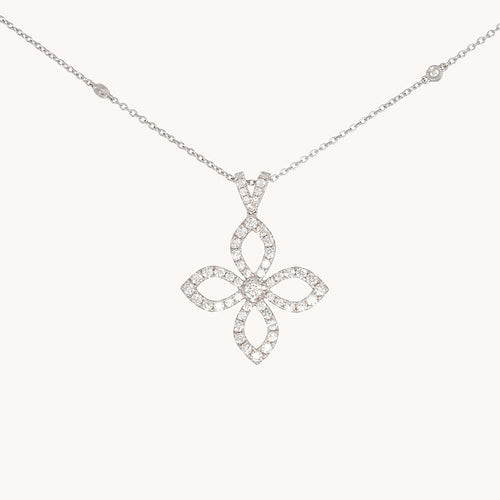
For example, when comparing diamond necklaces, I recommend considering both the chain's length and how the central design will sit against your neckline.
These are styling suggestions rather than fixed rules.
3. Verify the Jewelry Details
Before making a final choice, I recommend checking:
-
Chain length: Does the measurement include the clasp?
-
Pendant drop: How far does the pendant hang below the chain?
-
Extender: Can you adjust the necklace to different lengths?
For example, a 16-inch necklace with a 2-inch extender may offer fastening lengths up to approximately 18 inches, depending on its construction.
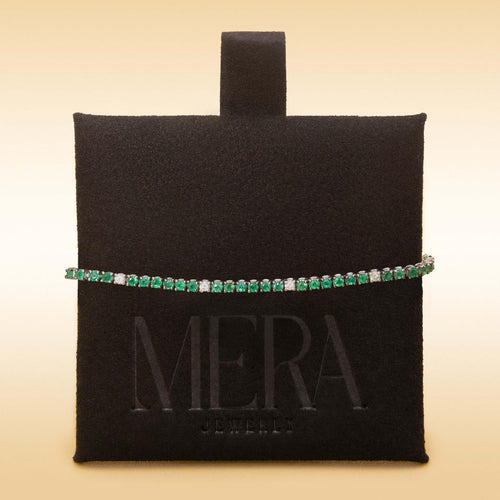
If you prefer gemstone styles, our emerald necklaces provide another option to explore while comparing necklace designs.
Common Necklace Measurement Mistakes
I recommend checking both the necklace length and how comfortably it sits against your skin. These are six mistakes I suggest avoiding.
|
Common mistake |
My recommendation |
|
Measuring only the front |
Measure the complete chain, including the clasp. |
|
Pulling the tape too tightly |
Keep the measurement comfortable. |
|
Confusing neck size with chain length |
Measure your preferred necklace position. |
|
Forgetting the pendant |
Check the pendant drop separately. |
|
Ignoring the extender |
Confirm the available adjustable lengths. |
|
Choosing a necklace that feels too tight |
Check for pressure, rubbing, or skin discomfort. |
Can a Tight Necklace Cause Skin Irritation?
I recommend choosing a necklace that rests comfortably against your neck without excessive pressure or rubbing.
Why? A tight necklace can contribute to friction-related irritation. However, redness, itching, or a rash may also result from allergic contact dermatitis caused by jewelry materials, particularly nickel.
Research helps explain why checking the metal is just as important as checking the fit.
A 2000 study by Gawkrodger, Lewis, and Shah examined patients reporting reactions to jewelry or metal contact. The researchers investigated sensitivity to nickel and other metals among people with suspected jewelry-related dermatitis.
Research: Gawkrodger et al. (2000), Contact Sensitivity to Nickel and Other Metals in Jewelry Reactors. Journal of the American Academy of Dermatology, 43(1), 31–36.
Another study by Emmett and colleagues (1988) examined nickel release from consumer products, including a necklace.
Researchers found that nickel released under laboratory conditions exceeded reaction thresholds in nickel-sensitive individuals, demonstrating how exposure to certain jewelry materials can contribute to allergic reactions.
Research: Emmett et al. (1988), Allergic Contact Dermatitis to Nickel: Bioavailability from Consumer Products and Provocation Threshold. Journal of the American Academy of Dermatology, 19(2), 314–322.
My recommendation: If a necklace causes discomfort, remove it and check both its fit and materials. If irritation continues or returns, consult a dermatologist. Changing necklace length alone may not resolve a metal allergy.
These studies examine metal allergy and nickel exposure; they do not establish that necklace length itself causes allergic dermatitis.
My Final Necklace Fit Checklist
Before choosing a necklace, I recommend asking yourself:
-
Have I measured where I want the necklace to sit?
-
Does the length feel comfortable?
-
Have I checked the complete chain length?
-
Will the pendant affect how it hangs?
-
Does the necklace have an adjustable extender?
-
Have I considered the necklace materials if I have sensitive skin?
For me, choosing the right necklace means finding a balance between its design, placement, and comfort.
At Mera Jewelry, I want customers to make informed jewelry decisions rather than rely only on a standard length chart.
Frequently Asked Questions
1. How do I measure necklace length without a measuring tape?
Use non-stretching string, position it around your neck, mark your preferred length, and measure it with a ruler.
2. Does necklace length include the clasp?
Necklace length is generally measured end to end, including the clasp. Check the retailer's specifications because conventions can vary.
3. Is an 18-inch necklace a good everyday length?
An 18-inch necklace is a common starting point because it often sits around the collarbone. The actual placement varies by person.
4. How do I know if a 16-inch necklace will fit?
Measure a 16-inch loop of string and check whether it rests comfortably at your preferred position.
5. Does neck circumference affect necklace fit?
Yes. Neck circumference can influence how shorter necklaces sit, but intended placement and necklace design also matter.
6. Can a necklace cause redness or itching?
Yes. Jewelry can irritate skin through friction or cause allergic contact dermatitis from certain materials, such as nickel. Persistent symptoms should be assessed by a dermatologist.
7. Does pendant length count as necklace length?
Pendant drop is generally measured separately from chain length. Check the individual product details before ordering.